In the hand8 min
How to read a saffron thread
A real stigma is a trumpet. Once that silhouette is in your eye, safflower, dyed silk, and paper strips are easier to set aside.
If you are looking up saffron threads, you are usually about to buy, or you already own a jar and you want to know whether it is the flower. Start with one piece, in good light. A saffron thread is one dried stigma of Crocus sativus. The tip that met the center of the bloom is narrow. The end that met the style is a little wider, sometimes slightly flared. It bends. The color runs from deep red to brick. When the packer has left the style on, you will see a pale yellow tail. That tail is still the flower. On an all-red cut, someone has trimmed it away.
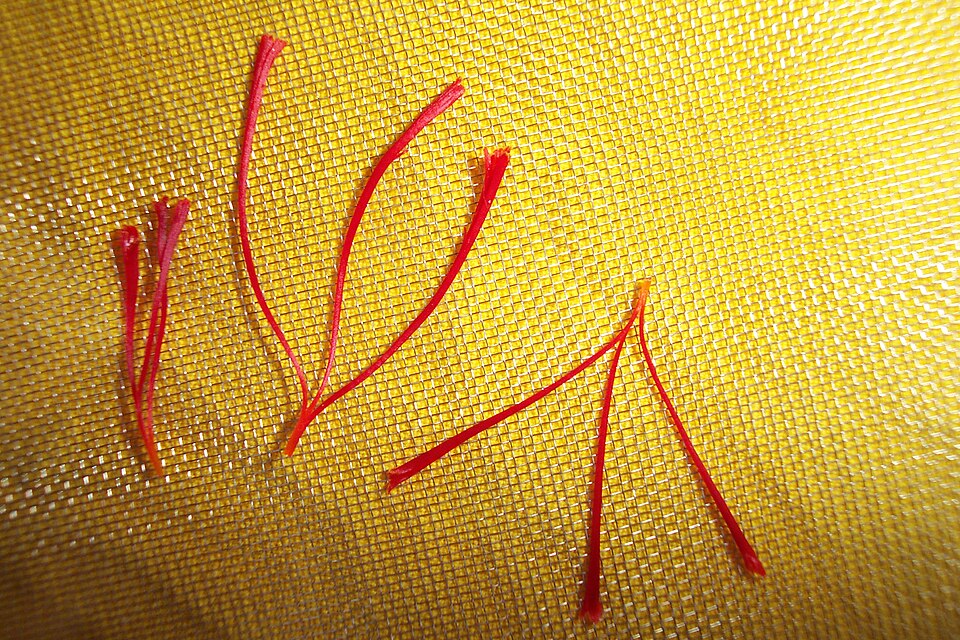
Dried stigmas. Narrower at the tip that met the center of the flower, a little wider at the base, and willing to bend. That is the trumpet this desk means.
Photograph by Emilie40, of Crocus sativus in France, released CC0. Original file, shown smaller. We did not open that lot, and the picture cannot tell you a grade or a crocin number.

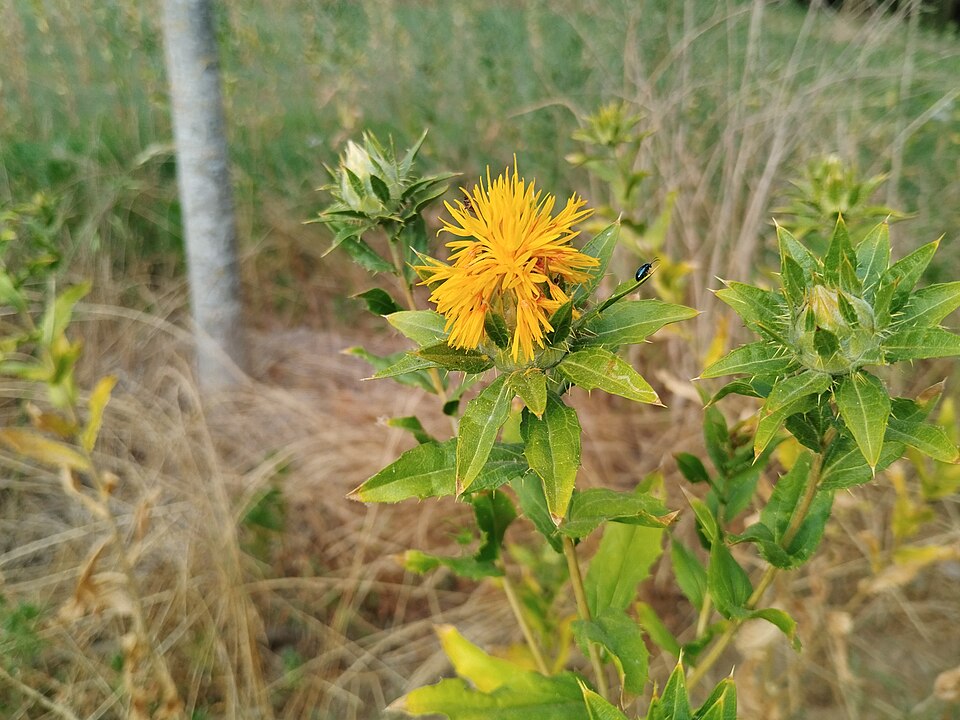
Safflower, still on the plant. The dried petals of this flower are straighter and more evenly orange than a stigma. You are looking at the living plant at Riudarenes, still on its stem.
Photograph by Josepgesti, Riudarenes, CC BY-SA 4.0. Original file, shown smaller.

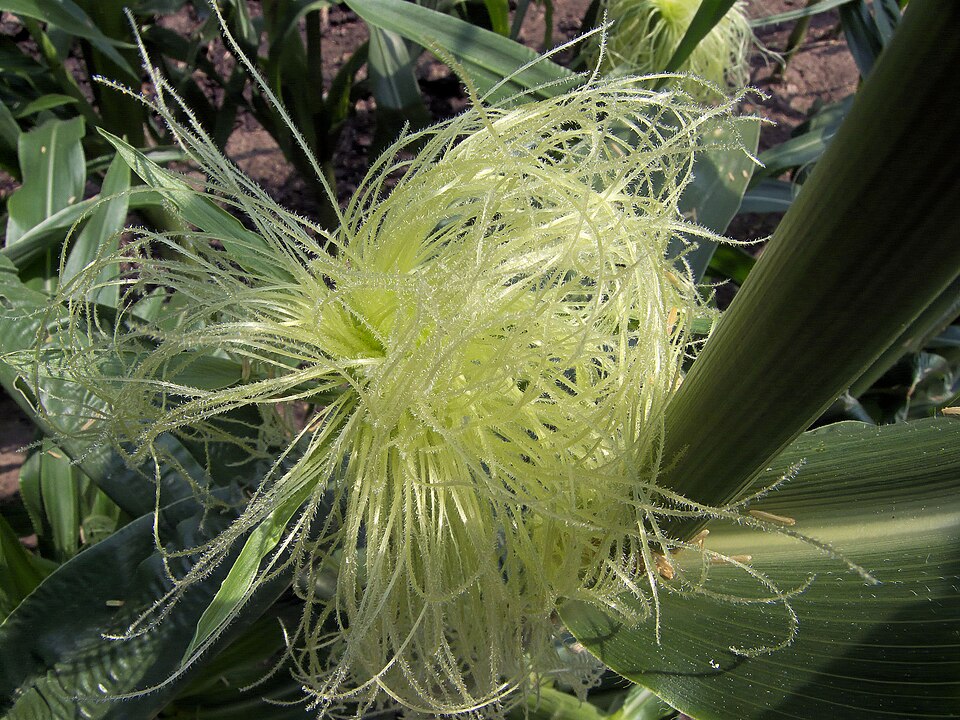
Corn silk, still on the ear. Thin, many, and alike, and still pale, because nobody has dyed it yet. A pouch of red fibers with this same habit is a different story.
Photograph by Rasbak, CC BY-SA 3.0. Original file, shown smaller.

The trumpet. Narrow where it met the center of the flower, a little wider at the base, and willing to bend. The color runs from deep red to brick. A pale tail, when you see one, is the style the packer left on.
Safflower. Straighter, flatter, and a more even orange. Carthamus is a different plant. Under its own name it is an honest dye. The trouble starts when the pouch borrows saffron's.
Corn silk, or a dyed fiber. Thin, many, and alike, the way silk on an ear of corn is. A dye can redden them in the pouch. Warm water often takes that red back in a hurry, and the fiber goes pale.
Paper, or a cut strip. The same width from end to end. A flower does not grow corners, and it does not grow a dozen pieces that match like confetti. When every strand in the jar does, look harder.
Length is a beauty, not a verdict
Length follows the bloom, and it follows how the threads were handled after picking. Kashmiri saffron is often praised for long threads, and a long fragrant trumpet is a pleasure to look at. A short one can still be saffron, when it smells right and keeps that flare. What you set aside is the long, flat, perfectly even orange strip. That is the shape of safflower, Carthamus, an honest dye when it wears its own name. Corn silk is thinner, and the strands look like copies of each other. Paper and gelatin are cut to one width, with corners a flower never grows.
Deep red is what you hope to see, and a dye can put that red in the pouch before you ever look. The pair you can actually check, before you own a laboratory, is the silhouette together with the smell. If you have never crushed a real thread, buy one half-gram from a packer with a name and a return address, and learn the smell there. Saffron Price is where the gram on those jars is worked out.
What a reassuring thread does
- It has a flare and a bend, even when it is short.
- Crushed, it smells of hay, dried rose, honey, and a cool floral note.
- In warm water it releases a slow gold and keeps a red core for a few minutes.
- Dry, it snaps between the fingers. A thread that bends like leather may be carrying water or oil, and saffron is sold by weight.
A thread that misses those signs is a reason to leave the pouch on the shelf. A thread that meets them has cleared a kitchen gate, which is as far as a plate and a spoon can take you. The water, the paper, and the fingers are written out on their own page, including the clever fraud they can still miss. The plants that turn up under saffron's name are on the substitutes page.