Hold one real stigma in the light and the dyed substitutes get easier to see. This desk is that lesson: the trumpet shape, the slow gold in warm water, the number on a lab sheet, and the ordinary plants that turn up under saffron's name.
In the light
A real stigma, and two plants sold beside it.
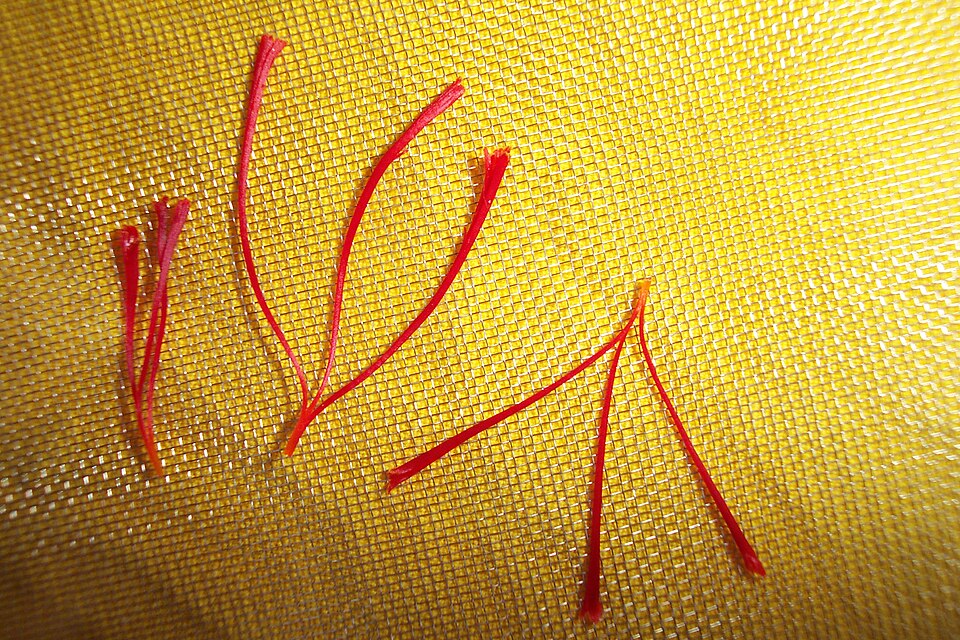
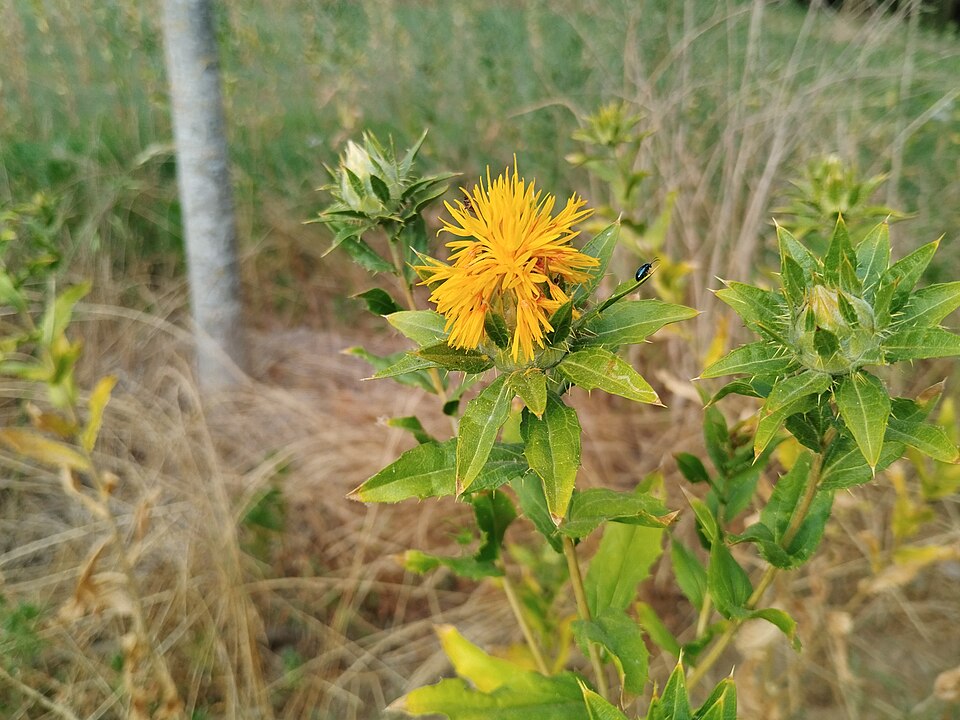
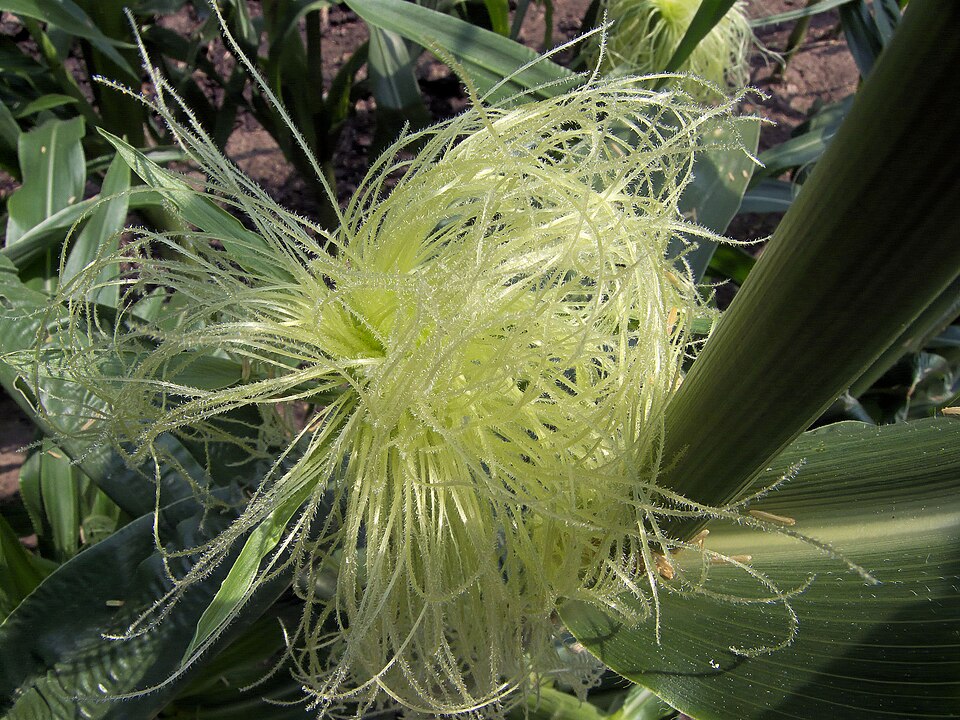
The large photograph is dried saffron, the kind of thread you can hold. Beside it are the living plants behind two common stand-ins, safflower and corn silk. The pictures belong to other people, and we have not opened those lots.
Dried stigmas. Narrower at the tip that met the center of the flower, a little wider at the base, and willing to bend. That is the trumpet this desk means.
Photograph by Emilie40, of Crocus sativus in France, released CC0. Original file, shown smaller. We did not open that lot, and the picture cannot tell you a grade or a crocin number.
Safflower, still on the plant. The dried petals of this flower are straighter and more evenly orange than a stigma. You are looking at the living plant at Riudarenes, still on its stem.
Corn silk, still on the ear. Thin, many, and alike, and still pale, because nobody has dyed it yet. A pouch of red fibers with this same habit is a different story.
The shape, drawn so you can hold it next to the others.
A flower in a field still leaves you the dried piece to learn. These drawings set the trumpet beside safflower, a thin fiber, and a strip cut from paper, so the difference is easy to see at a glance.
The trumpet. Narrow where it met the center of the flower, a little wider at the base, and willing to bend. The color runs from deep red to brick. A pale tail, when you see one, is the style the packer left on.
Safflower. Straighter, flatter, and a more even orange. Carthamus is a different plant. Under its own name it is an honest dye. The trouble starts when the pouch borrows saffron's.
Corn silk, or a dyed fiber. Thin, many, and alike, the way silk on an ear of corn is. A dye can redden them in the pouch. Warm water often takes that red back in a hurry, and the fiber goes pale.
Paper, or a cut strip. The same width from end to end. A flower does not grow corners, and it does not grow a dozen pieces that match like confetti. When every strand in the jar does, look harder.
Drawings, so you can hold the silhouettes next to each other. We drew them. We did not open a jar and photograph it for these.
Warm water
What the glass does, if you give it a few minutes.
Saffron usually takes its time. The water goes gold, and the strand keeps a red heart. When the color rushes out and the thread goes pale, that is your cue to stop.
1. Dry. One whole thread in the glass, before the water. You can still see the bend. Nothing has left it yet.
2. A little while in. Warm water takes on a pale gold. The strand stays red.
3. A few minutes. The gold deepens. A red core is still there, and if you lean in you can smell hay or honey.
4. The rush. The color leaves at once, harsh and even, and the strand goes pale. That is the moment to stop.
Drawn in the order a kitchen usually sees. We did not film a jar. A careful fraud can still behave.
Hold one piece up to the light. You are looking for a trumpet: narrow at the tip, a little wider at the base, willing to bend. A short fragrant thread can be the real flower. A long flat orange strip has the shape of safflower. Length is a pleasure. The test is the shape, and then the smell.
Water
One thread, a white plate, a spoon of warm water. Give it a few minutes. You want a slow gold, and a strand that stays red in the middle. Color that floods the spoon at once, and a thread that turns pale, is the pattern to walk away from.
Smell
Crush it between your fingers. The smell you want is hay, dried rose, honey, and a cool floral note, arriving together. A jar with no smell has gone tired, or it was never the flower. Perfume sweetness, with nothing underneath, is a warning of its own.
Next door
When the thread makes sense in your hand, two other desks finish the thought.
Whole threads are the ones you can still look at. The shop on this desk points at jars of intact stigmas for that reason. Powder has already given up the trumpet, and the kitchen tests get quieter. If you do buy powder, buy it from a packer you already trust for whole threads, and buy a little.
A test with a limit
Warm water and your nose will catch the ordinary frauds: dyed silk, safflower, a jar that has lost its smell. A careful fake can still behave. And neither test will tell you the crocin number. When the money is serious, ask the seller for the lab sheet on the lot in the jar.